Packing your baby’s hospital bag can feel overwhelming. You want to be sure you have everything your little one will need right from the start.
But what exactly should you pack? Missing an important item can cause unnecessary stress when you want to focus on your newborn. This guide will help you prepare the perfect hospital bag for your baby, making sure you have all the essentials without overpacking.
Keep reading to discover what you truly need to bring, so you can feel calm and ready when the big day arrives.
Clothing For Baby
Packing clothes for your baby’s hospital stay is important. Comfortable, soft clothes help your baby feel calm. Choose easy-to-wear pieces that fit well.
Bring enough clothing items to keep your baby warm and clean. Think about the weather and the hospital’s temperature. Soft fabrics work best for newborn skin.
Onesies And Sleepers
Onesies and sleepers are essential for your baby’s comfort. They keep your baby warm and make diaper changes easy. Choose soft cotton materials for breathability.
- Pack at least 3 onesies in newborn size.
- Include 2 to 3 sleepers with footies.
- Pick clothes with snaps or zippers for quick changes.
- Avoid outfits with tight necks or rough seams.
Hats And Socks
Babies lose heat quickly from their heads and feet. Hats and socks help keep them warm. Choose soft, stretchy fabrics to fit small heads and feet comfortably.
| Item | Recommended Quantity | Material |
| Newborn hat | 2 | Soft cotton or fleece |
| Socks | 4 pairs | Stretchy cotton blend |
Going-home Outfit
The going-home outfit is special. Choose something cute and comfortable. It should suit the weather and be easy to put on and take off.
Tips for choosing the going-home outfit:
- Pick soft fabrics like cotton.
- Use layers if the weather is cold.
- Choose snaps or zippers instead of buttons.
- Include a hat and socks to keep baby warm.
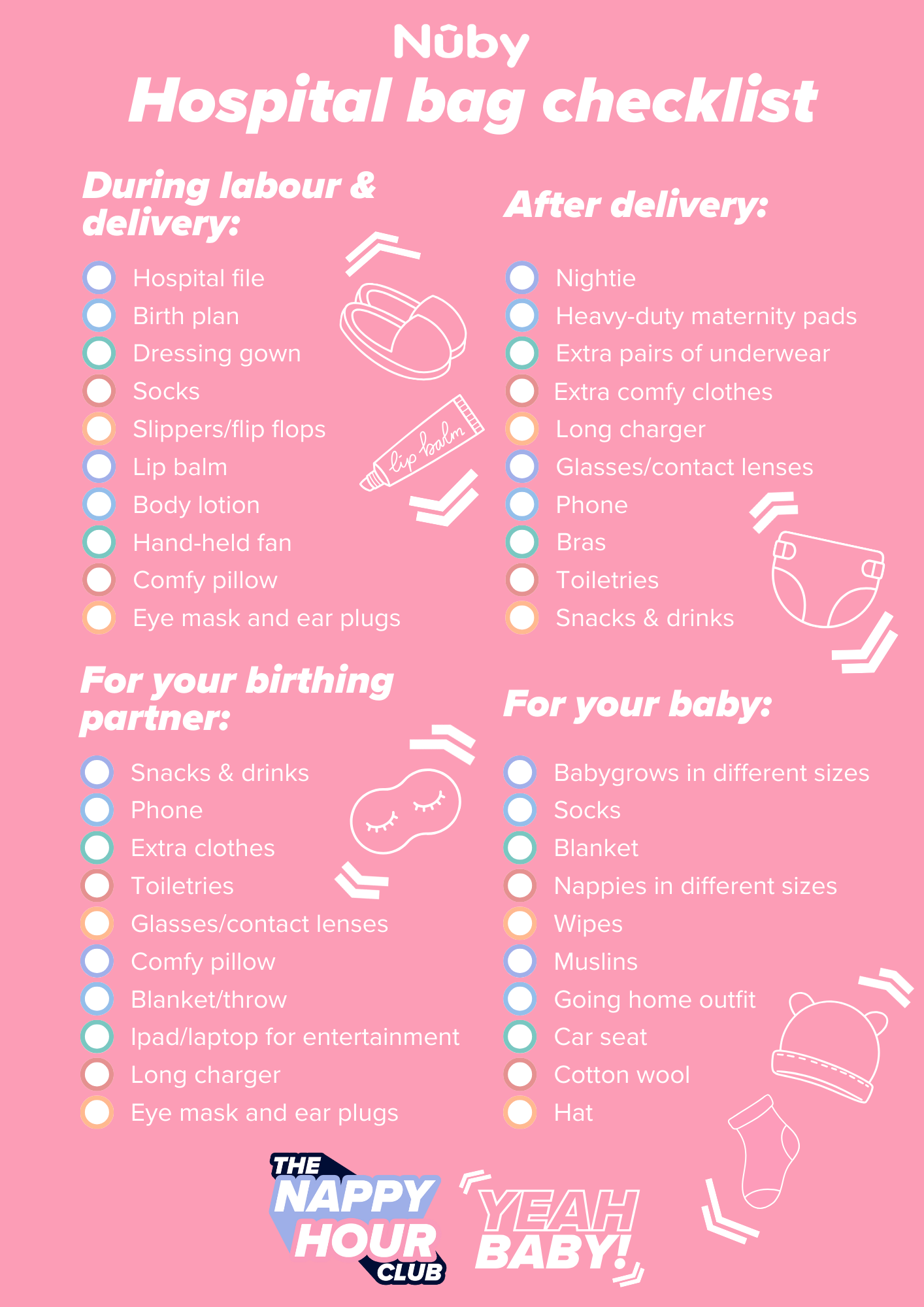
Credit: uk.nuby.com
Mom’s Comfort Items
Packing a hospital bag for your baby includes items for your own comfort. You will want to feel relaxed and ready for the new arrival.
Some essentials focus on clothing, support, and personal care. These help you stay comfortable during your hospital stay.
Comfortable Clothing
Choose loose and soft clothes that are easy to wear. Comfort is key after delivery and during rest times.
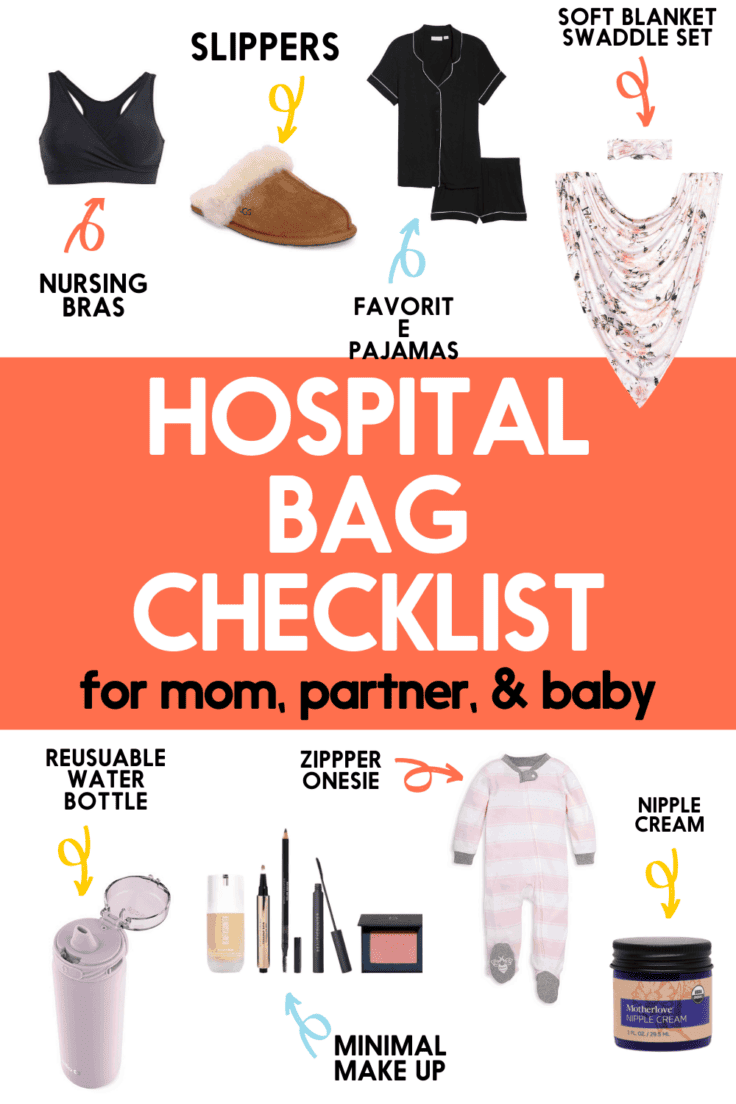
- Soft nightgowns or pajamas with front openings
- Loose-fitting tops and pants
- Warm socks and slippers
- A comfortable robe for walking around
Nursing Bras And Pads
Nursing bras offer support and easy access for breastfeeding. Pads keep you dry and fresh throughout the day.
| Item | Purpose | Tip |
| Nursing Bras | Support and easy breastfeeding | Choose soft, wireless bras |
| Nursing Pads | Absorb leaking milk | Have several for changing often |
Toiletries
Bring your favorite toiletries to feel fresh and clean. Small travel sizes save space in your bag.
- Toothbrush and toothpaste
- Face wash and moisturizer
- Shampoo and conditioner
- Hairbrush or comb
- Lip balm and deodorant
- Sanitary pads for after birth
Feeding Essentials
Packing the right feeding supplies for your baby’s hospital stay is important. These items help you feed your newborn comfortably and safely.
Whether you plan to breastfeed or use formula, having the essentials ready makes feeding easier during those first days.
Breastfeeding Supplies
Bring nursing bras for comfort and easy access. Nursing pads help keep you dry and prevent leaks. A nipple cream soothes soreness. A breast pump can be useful if you want to express milk.
- Nursing bras or tanks
- Disposable or washable nursing pads
- Nipple cream for soreness relief
- Breast pump and storage bags
- Burp cloths for spills
Bottles And Formula
If you plan to feed your baby formula, pack bottles and formula powder. Choose bottles with slow-flow nipples for newborns. Sterilizing equipment is also helpful to keep bottles clean.
| Item | Details |
| Baby bottles | 2 to 3, with slow-flow nipples |
| Formula powder | Enough for hospital stay |
| Bottle brush | For cleaning bottles |
| Sterilizer or sterilizing bags | To keep bottles germ-free |
Burp Cloths
Burp cloths protect your clothes from spit-up and messes. Choose soft, absorbent cloths that are easy to wash. Pack several to use throughout the day.
- Soft cotton cloths
- Large enough to cover shoulders
- At least 4 to 6 cloths
- Quick-drying fabrics preferred
Important Documents
Packing important documents in your baby’s hospital bag helps make the process smooth. These papers contain vital information for you and your baby.
Keep all documents organized and easy to reach when you arrive at the hospital. This saves time and avoids stress.
Identification And Insurance
Bring your photo ID and health insurance cards. These prove your identity and coverage. The hospital needs them for registration and billing.
- Driver’s license or passport
- Health insurance card
- Medicaid or Medicare card, if applicable
- Emergency contact information
Birth Plan
Your birth plan explains your wishes for labor and delivery. It helps the medical team understand your preferences.
Include details like:
- Preferred pain relief methods
- Who you want in the room
- Positions for labor and delivery
- Plans for feeding your baby
- Any cultural or personal preferences
Hospital Paperwork
| Document | Purpose |
|---|---|
| Pre-registration forms | Speeds up hospital check-in |
| Consent forms | Allow treatments and procedures |
| Medical history records | Provide health background |
| Allergy information | Prevent allergic reactions |
Baby Care Basics
Getting ready for your baby’s hospital stay is important. Packing the right items helps you care for your newborn comfortably. Focus on essentials that keep your baby clean and cozy.
This guide covers basic items for diapers, blankets, and pacifiers. These help in daily care and make the hospital experience easier.
Diapers And Wipes
Newborns need frequent diaper changes. Pack enough diapers to last your hospital stay. Baby wipes must be gentle and unscented to avoid irritation.
- At least 8 to 10 newborn-sized diapers
- Hypoallergenic baby wipes
- Diaper rash cream
- A small changing mat
Blankets And Swaddles
Babies feel safe wrapped in soft blankets. Swaddles help them sleep better by mimicking the womb’s snugness. Bring a few to keep your baby warm and calm.
| Item | Purpose | Recommended Quantity |
| Receiving Blanket | General warmth and covering | 2 to 3 |
| Swaddle Wrap | Secure wrapping for sleep | 2 |
| Lightweight Blanket | Layering for temperature control | 1 to 2 |
Pacifiers
Pacifiers soothe babies and reduce crying. Some hospitals provide them, but it’s good to bring your own. Choose BPA-free pacifiers with a one-piece design for safety.
Keep a clean container to store pacifiers when not in use. This helps keep them germ-free during the hospital stay.
Credit: lexiscleankitchen.com
Tech And Entertainment
Preparing for your baby’s arrival can be exciting. Packing a hospital bag with tech and entertainment items helps you stay connected and relaxed. Here’s what to include.
These essentials ensure you capture moments, enjoy downtime, and remain in touch with loved ones.
Phone And Chargers
Your phone is crucial for communication and entertainment. Don’t forget your charger to keep it powered up.
- Smartphone with a good camera
- Long charging cable
- Portable power bank
Books And Magazines
Reading material is perfect for relaxation. Choose light reads to enjoy during quiet moments.
Consider bringing:
- A couple of your favorite magazines
- An engaging novel
- Baby name books for last-minute inspiration
Camera
Capture your baby’s first moments with a quality camera. Ensure it’s ready with these items.
| Item | Description |
| Camera | Choose one with high resolution |
| Memory Card | Bring extra for more photos |
| Camera Charger | Keep your camera charged |
Extras For Dad Or Partner
Preparing for the baby’s arrival means packing wisely. Partners also need essentials for comfort and convenience. Here’s what to consider for dads or partners.
Being prepared ensures that dads or partners can support during this special time. A well-packed bag helps manage stress and stay focused.
Snacks And Drinks
Labor can be long, and energy is crucial. Easy-to-eat snacks keep energy levels up.
- Granola bars for quick energy
- Nuts and trail mix for protein
- Water bottles to stay hydrated
- Juice boxes for a sweet treat
Comfortable Clothes
Hospitals can be chilly. Comfortable clothes make a difference.
Pack layers to adjust to the hospital’s temperature.
- T-shirts for a casual feel
- Sweatpants for warmth
- Hoodie for extra comfort
- Socks to keep feet warm
List Of Contacts
Staying connected is essential. A list of contacts helps share the news.
Bring a list or have it saved on your phone.
- Family members to update
- Friends to share the joy
- Work contacts for any updates
- Healthcare providers for questions

Credit: laurynlately.com
Frequently Asked Questions
What Essentials Should I Pack In My Baby’s Hospital Bag?
Pack newborn clothes, diapers, wipes, a blanket, and a hat. Include feeding supplies like bottles or nursing pads. Don’t forget a going-home outfit and baby’s health documents.
How Many Outfits Does A Baby Need In Hospital?
Bring 3-4 outfits for your baby. Include onesies, sleepers, and a going-home outfit. Choose soft, comfortable, and easy-to-change clothes.
Should I Pack Diapers And Wipes For The Hospital?
Yes, pack newborn-sized diapers and gentle wipes. Hospitals may provide some, but having your own ensures comfort and convenience. Choose hypoallergenic options for sensitive skin.
Is It Necessary To Bring Baby Blankets To The Hospital?
Yes, bring 1-2 soft baby blankets. They keep your baby warm and cozy. Hospitals often provide blankets, but personal ones add comfort.
Conclusion
Packing your baby’s hospital bag early brings peace of mind. Choose soft clothes, diapers, and a cozy blanket. Don’t forget important documents and a camera for memories. Keep things simple and organized to avoid stress. Ready bags help you focus on your new arrival.
Stay calm and enjoy the special moments ahead. Your thoughtful preparation makes the hospital stay smoother. Baby and you deserve comfort and care from the start.