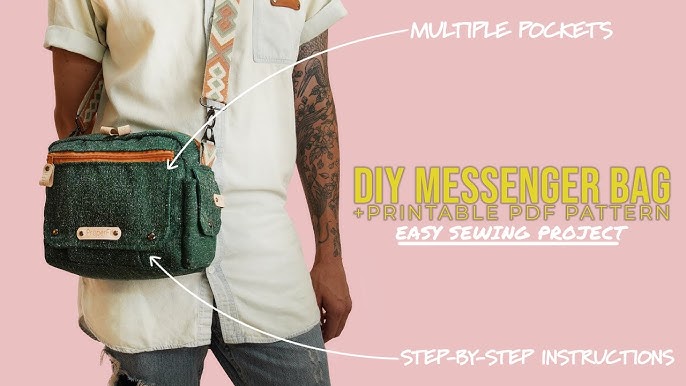
Have you ever wanted a stylish messenger bag that fits your style perfectly? What if you could make one yourself, quickly and without any hassle?
Sewing your own messenger bag is easier than you think. You don’t need fancy skills or expensive tools. Imagine carrying a bag that you made with your own hands—customized just for you. In this guide, you’ll discover simple steps to create a messenger bag that looks great and feels right.
Ready to start? Let’s make your perfect bag together!
Materials Needed
Sewing a messenger bag is simple with the right materials. Prepare everything before you start.
This guide covers fabric choices, tools, and optional decorations you might want.
Fabric Choices
Choose fabrics that are strong and easy to sew. Cotton canvas and denim are great options.
- Cotton canvas: durable and holds shape well
- Denim: sturdy and gives a casual look
- Felt: soft but less durable
- Leather or faux leather: stylish but harder to sew
Tools And Accessories
| Tool | Purpose |
| Sewing machine | Speed up sewing and create strong stitches |
| Scissors | Cut fabric cleanly |
| Measuring tape | Get accurate fabric sizes |
| Pins or clips | Hold fabric pieces together while sewing |
| Thread | Match fabric color for neat finish |
| Iron | Press seams flat for better sewing |
Optional Embellishments
Add personal style with buttons, patches, or fabric paint. These make your bag unique.
- Buttons in different shapes and colors
- Fabric patches with fun designs
- Fabric paint for custom patterns
- Decorative zippers or straps
Preparing The Fabric
Before sewing your messenger bag, preparing the fabric is crucial. It helps ensure accurate cutting and neat seams.
Take your time to measure and mark the fabric carefully. This step makes sewing easier and the final bag look professional.
Measuring And Cutting
Start by measuring your fabric pieces according to your messenger bag pattern. Use a ruler or measuring tape for precision.
- Lay the fabric flat on a clean surface.
- Use chalk or a fabric marker to mark the measurements.
- Double-check each measurement before cutting.
- Cut the fabric slowly with sharp fabric scissors.
Marking Seam Lines
Mark the seam lines on your fabric to guide your sewing. These lines show where to stitch and help keep seams even.
| Tool | Use |
|---|---|
| Fabric Chalk | Draw clear, temporary lines that wash out |
| Water-Soluble Pen | Mark precise seam lines that disappear with water |
| Tracing Wheel and Paper | Transfer pattern lines without marking fabric directly |
Sewing The Main Body
Making the main body of a messenger bag is an important step. It holds all other parts together.
You will need to sew the panels and shape the bag carefully to get a strong base.
Stitching The Panels
Start by joining the front and back panels. Use a straight stitch for strong seams.
- Place panels right sides together
- Pin edges to keep fabric aligned
- Sew along the pinned edges with a 1/2 inch seam allowance
- Press seams open with an iron
- Topstitch close to the seam for extra strength
Creating The Bag Shape
After stitching the panels, form the bag shape by sewing the sides and bottom.
| Part | Action |
| Sides | Fold edges, pin, and sew to join front and back panels |
| Bottom | Sew the bottom panel to the sides and front/back |
| Seam allowances | Trim and finish edges to reduce bulk |
| Pressing | Iron seams flat to keep shape neat |

Credit: www.skillshare.com
Making The Strap
The strap is an important part of a messenger bag. It helps you carry the bag comfortably. Making the strap right will make your bag look good and last longer.
Here we focus on choosing the correct strap length and attaching the strap securely to the bag.
Choosing Strap Length
The strap length depends on how you like to wear the bag. You want the bag to rest comfortably at your side or hip.
- Measure from one shoulder to the opposite hip across your body.
- Add a few inches to allow for adjustments.
- Consider if you want the strap to be adjustable or fixed.
- Use a soft tape measure or string for accuracy.
Choosing the right length helps avoid shoulder strain and makes the bag easier to carry.
Attaching The Strap
Attach the strap firmly to the bag to keep it secure. Use strong stitching or hardware for durability.
| Attachment Method | Tools Needed | Durability |
| Sewing the strap ends to bag | Needle, heavy thread, sewing machine | High |
| Using D-rings and clips | D-rings, clips, pliers, thread | Medium |
| Rivets for extra strength | Rivet setter, hammer, rivets | Very high |
Check the strap attachment before use to ensure it can hold weight without pulling off.
Adding Pockets And Closures
Sewing a messenger bag can be a fun and rewarding project. Adding pockets and closures is essential for functionality.
Learn how to incorporate these features to enhance your bag’s usability and style.
Sewing Pockets
Pockets add convenience and organization to your messenger bag. Follow these steps to sew them with ease.
- Choose the size and location for your pocket on the fabric.
- Cut a piece of fabric slightly larger than the desired pocket size.
- Fold and press the edges to prevent fraying.
- Sew the pocket onto the main bag piece, leaving the top open.
Installing Zippers Or Buttons
Closures like zippers and buttons keep your belongings secure. Here’s how to install them correctly.
Installing a Zipper:
- Place the zipper face down on the fabric edge.
- Use a zipper foot to sew along the zipper teeth.
- Repeat on the other side.
- Ensure the zipper opens and closes smoothly.
Adding Buttons:
| Type of Button | Best Use |
| Snap Button | Quick access pockets |
| Sew-On Button | Flap closures |
| Magnetic Snap | Large compartments |

Credit: m.youtube.com
Finishing Touches
After sewing the main parts of your messenger bag, the last steps make it look neat and durable. Finishing touches help keep the fabric edges safe from fraying.
These final details also give your bag a polished appearance. Let’s look at hemming edges and pressing for a smooth finish.
Hemming Edges
Hemming the edges stops the fabric from unraveling. Fold the raw edges inside the seam allowance and sew them down.
- Trim any loose threads before hemming.
- Fold edges twice for a clean look.
- Use matching thread for sewing hems.
- Keep stitches even and close to the fold.
- Check that hems lie flat without puckering.
Pressing And Final Adjustments
Pressing your bag helps set the seams and shapes the fabric nicely. Use an iron with the correct temperature for your material.
| Fabric Type | Iron Setting | Pressing Tips |
| Canvas | High heat | Use steam and press firmly |
| Cotton | Medium heat | Press with steam, avoid wrinkles |
| Polyester | Low heat | Use a pressing cloth, avoid direct heat |
After pressing, check all seams and hems for any loose threads. Trim or fix them to keep your bag looking its best.
Tips For Customizing
Customizing your messenger bag can make it unique and personal. Small changes can have a big impact on the final look.
Here are some ideas to help you tailor your messenger bag. These tips focus on fabric choices and decorative elements.
Using Different Fabrics
Choosing the right fabric can change the style of your messenger bag. Consider the following fabric options:
- Cotton for a casual look
- Denim for durability
- Canvas for a classic style
- Leather for an elegant touch
Adding Decorative Elements
Decorative elements make your bag stand out. Use patches, buttons, or embroidery to add personality.
You can also sew on ribbons or lace. These can be stitched along the edges or in patterns.
| Element | Effect |
| Patches | Adds fun and color |
| Buttons | Gives a vintage feel |
| Embroidery | Offers a custom design |

Credit: m.youtube.com
Frequently Asked Questions
What Materials Do I Need To Sew A Messenger Bag?
You need fabric, lining, thread, a zipper, and a strap. Choose durable fabrics like canvas or denim for strength. Also, gather sewing tools like scissors, pins, and a sewing machine. Quality materials ensure your messenger bag lasts long and looks great.
How Long Does It Take To Sew A Messenger Bag?
Sewing a basic messenger bag typically takes 2 to 4 hours. Time depends on your sewing experience and bag complexity. Beginners may need extra time to follow steps carefully. Planning and preparation help speed up the process.
Can I Customize My Messenger Bag Design?
Yes, you can easily customize size, fabric, and pockets. Add patches, embroidery, or unique straps for a personal touch. Customizing makes your bag unique and suits your style and needs perfectly.
Is Sewing A Messenger Bag Suitable For Beginners?
Absolutely! This project uses simple stitches and basic patterns. It’s a great way to practice sewing skills and make something useful. Follow clear instructions to avoid mistakes and enjoy the learning process.
Conclusion
Sewing a messenger bag can be simple and fun. Follow each step with care and patience. Choose the right fabric and tools to make your work easier. Practice helps improve your sewing skills quickly. Soon, you will have a useful bag to carry your things.
Enjoy creating something unique with your own hands. Keep trying and learning new sewing projects. This easy guide makes sewing a messenger bag possible for everyone.