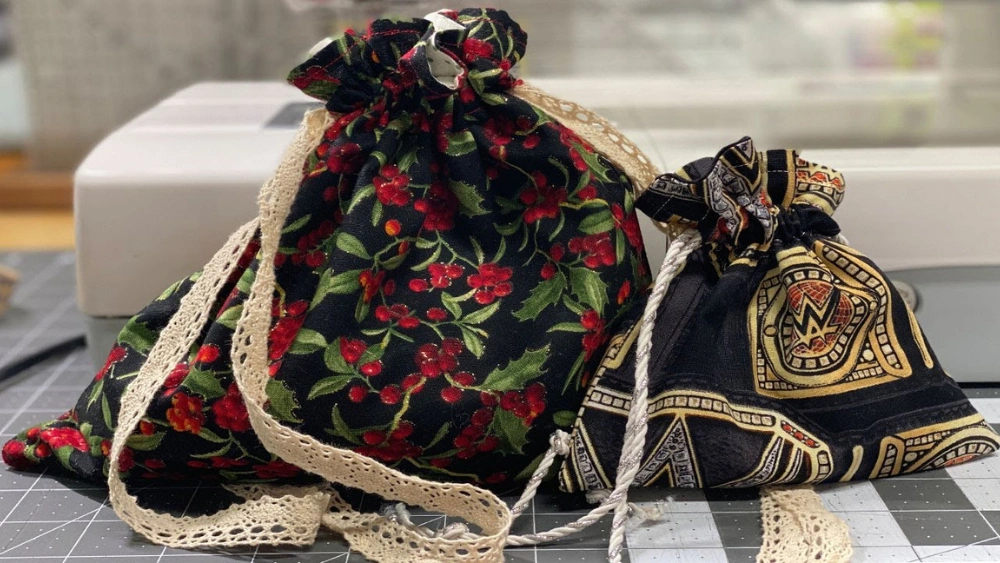
Have you ever wanted a bag that’s both simple and stylish, but also strong enough to hold your things? Making a lined drawstring bag is easier than you think, and it gives you a chance to create something useful with your own hands.
Whether you need a handy pouch for everyday use or a unique gift for someone special, this step-by-step guide will help you make a bag that looks great and lasts long. Keep reading, and soon you’ll have a custom drawstring bag tailored just for you.
Materials Needed
Making a lined drawstring bag requires some basic materials. These materials help create a sturdy and neat bag.
Knowing what you need before starting makes the project easier and more fun.
Fabric Choices
Choose fabrics that are strong and easy to sew. Cotton is a good option for beginners. You need two types of fabric: one for the outside and one for the lining inside.
- Cotton fabric: soft and easy to work with
- Canvas: strong and durable
- Linen: natural and breathable
- Quilting cotton: colorful and lightweight
- Matching or contrasting fabric for lining
Essential Tools
You need some tools to cut, measure, and sew your bag. These tools help you work safely and make neat stitches.
- Sewing machine or needle for hand sewing
- Scissors or rotary cutter to cut fabric
- Measuring tape or ruler
- Pins or clips to hold fabric together
- Iron and ironing board to press seams
- Safety pin to thread the drawstring
Optional Accessories
You can add extras to make your bag look nice or work better. These are not required but can be helpful.
- Decorative trims or ribbons for style
- Fabric markers or stamps for personalization
- Interfacing for extra stiffness
- Button or snap closures for security
- Extra cords or ribbons for drawstring

Credit: sewcraftyme.com
Preparing The Fabric
Preparing the fabric is the first step to make a lined drawstring bag. This part helps you get clean and even pieces for sewing.
Take your time to prepare the fabric well. It makes sewing easier and the bag stronger.
Measuring And Cutting
Measure the fabric carefully before cutting. Use a ruler or measuring tape for accuracy.
Cut two main pieces: one for the outer bag and one for the lining. Both pieces should be the same size.
- Decide the bag size you want
- Measure width and height on fabric
- Mark the measurements clearly
- Use sharp scissors for clean cuts
- Cut slowly to keep straight edges
Marking Seam Allowances
Mark seam allowances on the fabric to know where to sew. Usually, ½ inch is a good seam allowance.
Use a fabric pen or chalk to draw lines inside the cut edges. This helps you sew straight seams.
- Mark ½ inch from the fabric edges
- Draw dotted lines along all sides
- Check marks before sewing
- Adjust if needed for thicker fabric
Sewing The Lining
Adding a lining to your drawstring bag gives it a neat look and extra strength. Sewing the lining is a simple process if you follow the right steps.
This guide focuses on assembling the lining pieces and finishing the edges to create a clean inside for your bag.
Assembling The Lining Pieces
Start by joining the lining fabric pieces just like the outer fabric. Align the edges with right sides facing each other before sewing.
- Place two lining pieces together with right sides facing.
- Pin the edges to hold them in place.
- Sew along the pinned edges with a straight stitch.
- Repeat for all sides except the top opening.
- Press the seams open using an iron for a flat finish.
Finishing The Edges
Finish the raw edges of your lining to prevent fraying and give durability. Use one of these common methods.
- Use a zigzag stitch along all raw edges.
- Apply bias tape to cover the edges neatly.
- Sew a serger stitch if you have a serger machine.
- Fold edges under and sew a narrow hem.
| Method | Tools Needed | Durability |
| Zigzag Stitch | Sewing machine | Good |
| Bias Tape | Bias tape, sewing machine | Very Good |
| Serger Stitch | Serger machine | Excellent |
| Narrow Hem | Sewing machine, iron | Good |

Credit: www.youtube.com
Creating The Outer Bag
Making the outer bag is the first big step. It holds the shape and looks of the drawstring bag.
Choose sturdy fabric for the outside. This fabric needs to be strong to protect what is inside.
Joining Outer Fabric Panels
Start by cutting two fabric panels in the size you want. These will form the front and back of the bag.
Place the panels with the right sides facing each other. Sew along the sides and bottom edges.
- Use a straight stitch for strong seams
- Leave the top edge open for the drawstring
- Trim seam allowances to reduce bulk
Adding Reinforcements
Add extra fabric or interfacing at stress points. This helps the bag last longer and hold weight.
Focus on the top corners where the drawstring will pull. Sew small fabric patches or use strong interfacing here.
- Cut small squares of fabric for corner patches
- Attach patches inside the bag at the top corners
- Topstitch around patches for extra strength
- Use fusible interfacing on the back of fabric if needed
Attaching The Lining To The Outer Bag
Adding a lining to your drawstring bag gives it a neat finish. It also makes the bag stronger and hides raw edges inside.
Attaching the lining correctly is important. It keeps the shape of the bag and makes it last longer.
Aligning And Pinning
Start by placing the outer bag and the lining right sides together. Match the top edges of both pieces carefully.
Use pins to hold the layers in place. Pin around the top edge about every 2 to 3 inches to keep the fabric from shifting.
- Place outer bag and lining with right sides facing each other.
- Match all side seams and corners.
- Pin evenly along the top edges.
- Check that the drawstring casing is aligned if you added one.
Sewing The Top Edge
Sew along the pinned top edge with a straight stitch. Use a ½ inch seam allowance for a clean finish.
Keep the fabric smooth as you sew. Remove pins before the needle reaches them to avoid damage to the machine.
- Sew slowly and carefully along the pinned edge.
- Leave a small opening if you need to turn the bag right side out.
- Backstitch at the start and end to secure the seam.
- Trim excess threads for a neat look.

Credit: www.youtube.com
Making The Drawstring Channel
The drawstring channel is a key part of your bag. It holds the string that will close the bag. Let’s learn how to make it.
Follow these simple steps to create a neat and functional drawstring channel.
Folding And Stitching
Start by folding the top edge of your fabric. Fold it down about one inch. This will create a neat edge for your channel.
Stitch along the folded edge. Ensure your stitches are straight to keep the channel even.
- Fold down one inch from the top edge.
- Pin the fold to keep it in place.
- Sew along the folded edge with a straight stitch.
Leaving Openings For The Drawstring
You need to leave openings for the drawstring. Do this by not sewing a small section at both ends of the channel.
These openings will allow the string to pass through easily.
- Mark a one-inch gap on each end of the channel.
- Do not sew over these gaps.
- Ensure gaps are large enough for the string to fit.
Inserting The Drawstring
Learn how to insert a drawstring in your bag. This adds a functional and decorative touch.
We’ll guide you through choosing the right type and threading it smoothly.
Choosing The Drawstring Type
Selecting the right drawstring is key. It affects both style and ease of use.
- Cotton cord for a soft and natural feel
- Nylon rope for strength and durability
- Silk ribbon for a touch of elegance
Threading Techniques
Threading the drawstring requires precision. Follow these steps for success.
| Technique | Difficulty |
| Safety pin method | Easy |
| Bodkin tool usage | Medium |
| Hand threading | Hard |
Final Touches
After sewing your lined drawstring bag, the last steps give it a neat look. These final touches help the bag last longer and work better.
Focus on securing the drawstring ends and pressing the bag. Also, inspect your work to find any small fixes needed.
Securing The Drawstring Ends
To keep the drawstrings from slipping out, you need to secure their ends. This also stops the strings from fraying over time.
- Cut the drawstring to your preferred length.
- Tie a tight knot at each end of the drawstring.
- Optional: Add a small drop of fabric glue on knots for extra hold.
- Trim any loose threads carefully.
- Test the knots by gently pulling to make sure they hold.
Pressing And Inspecting
Pressing the bag smooths out wrinkles and shapes the fabric. After pressing, inspect the bag for any loose threads or sewing mistakes.
| Task | Details |
| Pressing | Use a low heat setting on your iron to avoid damage. |
| Inspecting Seams | Check all seams for loose stitches or holes. |
| Trim Threads | Cut any loose threads close to the fabric surface. |
| Test Drawstring | Pull the drawstring to ensure smooth movement and secure ends. |
Frequently Asked Questions
What Materials Are Needed To Make A Lined Drawstring Bag?
You need fabric for lining and outer layer, drawstring cord, sewing thread, and scissors. A sewing machine helps speed up the process. Choose durable fabric like cotton or canvas for best results.
How Do You Sew The Lining Inside The Drawstring Bag?
Place the lining and outer fabric right sides together. Sew along edges, leaving an opening. Turn the bag inside out through the opening. Finally, sew the opening closed neatly.
Can Beginners Easily Make A Lined Drawstring Bag?
Yes, the project is beginner-friendly. It requires basic sewing skills like straight stitching and turning fabric. Following step-by-step instructions ensures a successful and enjoyable sewing experience.
How Do You Add A Drawstring To The Bag?
Create a casing by folding the top edge of the fabric. Sew along the folded edge, leaving space to insert the drawstring. Use a safety pin to thread the cord through the casing.
Conclusion
Making a lined drawstring bag is simple and fun. You need just a few materials and basic sewing skills. Following the steps carefully helps you create a sturdy, useful bag. The lining adds strength and hides the seams inside. You can customize the fabric and size to fit your needs.
This project is great for beginners and experienced crafters alike. Try making one today and enjoy your handmade bag every day. Simple, practical, and stylish. What’s stopping you?