Are you tired of digging through your backpack to find your camera gear? Packing your camera bag inside your backpack the right way can save you time, protect your equipment, and make your adventures much smoother.
In this guide, you’ll discover simple, practical tips to organize your camera gear efficiently. Whether you’re heading out for a quick shoot or a long trip, these easy steps will help you carry your camera safely and access it quickly when you need it most.
Keep reading to learn how to pack like a pro and never miss a perfect shot again!

Credit: www.youtube.com
Choosing The Right Backpack
Packing your camera bag inside a backpack needs careful thought. The right backpack keeps your gear safe and easy to carry.
Choosing a backpack that fits your camera and accessories helps you stay organized. It also protects your equipment during travel.
Size And Compartments
Pick a backpack with the right size for your camera and lenses. It should have enough space for your gear and personal items.
Look for backpacks with separate compartments. These help keep your camera, lenses, and accessories organized and easy to reach.
- Compartments for camera body and lenses
- Space for memory cards and batteries
- Pockets for personal items like keys and snacks
- Expandable sections for extra gear
Material And Durability
Choose a backpack made from strong, water-resistant materials. This keeps your camera gear safe from rain and rough use.
Check the zippers and seams. Good quality parts last longer and protect your equipment better.
- Water-resistant fabric like nylon or polyester
- Reinforced stitching on straps and pockets
- Durable zippers that slide smoothly
- Padding to protect your camera from bumps
Comfort And Support
A comfortable backpack helps you carry your camera gear for a long time. Look for padded straps and back support.
Adjustable straps let you fit the backpack to your body. This reduces strain on your shoulders and back.
- Padded shoulder straps for comfort
- Breathable back panel to reduce sweat
- Chest or waist straps for extra support
- Adjustable straps to fit your body size

Credit: www.reddit.com
Essential Camera Gear To Pack
Packing your camera bag inside a backpack needs careful planning. You want to carry all important gear safely and neatly.
Organizing your camera gear helps you find items fast and keeps equipment protected during travel.
Camera Body And Lenses
The camera body is the core of your setup. Pack it with care to avoid damage. Choose lenses based on your shooting plans.
Use padded compartments to protect your camera and lenses. Keep lens caps on to avoid scratches.
- Main camera body
- Standard zoom lens
- Prime lens for portraits
- Wide-angle lens for landscapes
- Lens caps and body cap
Accessories And Batteries
Bring extra batteries to avoid running out of power. Include memory cards for enough storage space.
Other useful accessories are lens filters, remote shutter release, and a tripod if space allows.
- Extra camera batteries
- Memory cards in protective cases
- Lens filters (UV, polarizer)
- Remote shutter release
- Small tripod or monopod
Cleaning Supplies
Keep your gear clean to ensure clear photos. Carry basic cleaning tools for quick fixes outdoors.
Use a soft brush, microfiber cloth, and lens cleaning solution to remove dust and smudges safely.
- Soft lens cleaning brush
- Microfiber cleaning cloth
- Lens cleaning solution
- Air blower to remove dust
- Sensor cleaning swabs (if needed)
Organizing Camera Gear Efficiently
Packing a camera bag inside a backpack needs careful planning. Organizing gear well saves time and protects your equipment.
Good organization helps you find items fast and keeps everything safe during travel.
Using Padded Dividers
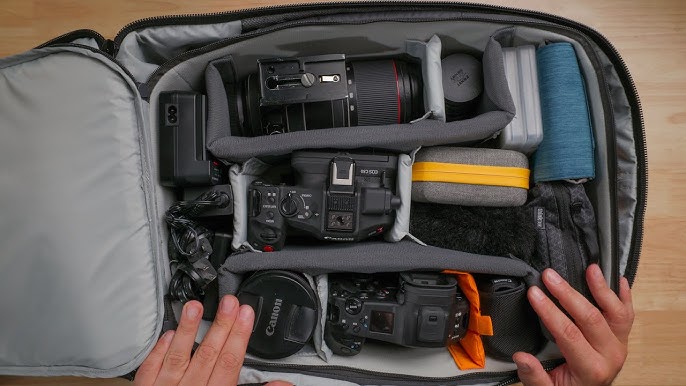
Padded dividers separate your camera gear inside the backpack. They stop gear from banging together and getting damaged.
Use dividers to create small sections for lenses, cameras, and accessories. Move dividers to fit your gear size perfectly.
- Protects fragile parts from impact
- Keeps gear stable and prevents shifting
- Allows custom space for each item
Customizing Compartments
Arrange compartments to match your gear’s shape and size. Custom spaces help you pack more efficiently and keep items organized.
Place heavier items at the bottom for balance. Keep frequently used items on top or near the opening for easy access.
- Adjust compartments for cameras, lenses, batteries
- Use small pockets for memory cards and cables
- Separate wet or dirty items from clean gear
Protecting Fragile Items
Wrap fragile items like lenses and filters in soft cloth or bubble wrap. Extra padding helps prevent scratches and cracks.
Use lens caps and keep batteries and memory cards in cases. Avoid placing fragile gear near hard objects in the backpack.
- Wrap lenses in microfiber cloth
- Use hard cases for extra protection
- Keep fragile items away from heavy gear

Credit: www.reddit.com
Space-saving Packing Techniques
Packing a camera bag inside a backpack can be tricky. You want to save space but keep your gear safe and easy to reach.
Using smart packing techniques helps you fit everything without damage or clutter. This guide shows simple ways to pack efficiently.
Rolling And Layering
Roll soft items like cloths or camera cleaning rags. This saves space and prevents wrinkles.
Layer your gear by placing heavier items at the bottom. Put delicate items on top for easy access and protection.
- Roll clothes or lens cloths tightly
- Place camera body and lenses in the middle layer
- Use soft layers to protect fragile gear
Utilizing Small Pouches
Small pouches keep tiny accessories like batteries, memory cards, and cables organized. This stops them from getting lost.
Use different pouches for different items. Label them if you can to find things faster.
- Use pouches for batteries and chargers
- Keep memory cards in a separate pouch
- Store cables and adapters neatly
Maximizing Empty Spaces
Fill small empty spaces with soft items like lens caps or cloths. This stops gear from shifting inside the backpack.
Use every corner and gap to store smaller gear. This keeps your bag compact and balanced.
- Put lens caps in corners or small gaps
- Fill spaces between gear with cleaning cloths
- Use shoe compartments or side pockets for tripods or small items
Balancing Weight And Accessibility
Packing your camera bag inside a backpack needs care. You want to keep the weight balanced. Also, you want easy access to your gear.
Good packing helps protect your camera and makes your trip more comfortable. Let’s look at how to do this well.
Distributing Weight Evenly
Heavy items should go close to your back. This keeps the center of gravity near you. It helps avoid strain and improves balance.
Try to spread the weight across your backpack. Avoid putting all heavy gear on one side.
- Place the camera body and heavy lenses near the center, close to your back.
- Put lighter accessories like batteries and filters toward the outer edges.
- Keep padding between gear to prevent shifting.
- Use smaller compartments for cables and memory cards.
Prioritizing Frequently Used Gear
Think about what you use most during shoots. Pack those items where you can reach them fast.
| Gear | Placement |
| Camera body | Main compartment near the top |
| Lenses | Side pockets or padded slots |
| Batteries and memory cards | Small front or side pockets |
| Tripod | External straps or bottom compartment |
Quick Access Tips
Quick access helps you catch moments fast. Keep your most used items easy to grab without unpacking everything.
- Use side zipper pockets for your camera body.
- Store spare batteries near the top front of the bag.
- Attach a small pouch with filters to the outside.
- Keep lens caps and cleaning cloths in an outer pocket.
- Label compartments to find gear fast.
Additional Tips For Backpack Camera Packing
Packing your camera gear inside a backpack needs some smart planning. You want to keep your equipment safe and easy to access.
Consider weather changes, security, and maintenance to ensure your gear stays in top condition.
Weather Protection
Weather can change quickly, so protect your camera gear. Rain and dust can damage sensitive parts.
- Use waterproof covers for your backpack
- Keep silica gel packs to absorb moisture
- Store gear in zip-lock bags for extra protection
Security Measures
Keeping your camera safe is vital. You should always be aware of your surroundings.
Consider using an anti-theft backpack with lockable zippers. Always carry your backpack in front in crowded places.
Maintenance On The Go
Regular maintenance keeps your camera working well. Clean lenses and remove dust often.
| Task | Frequency |
| Lens cleaning | Weekly |
| Battery check | Daily |
| Dust removal | After each use |
Frequently Asked Questions
How To Organize Camera Gear Inside A Backpack?
Use padded compartments and dividers to separate lenses and accessories. Place heavier items at the bottom for balance. Keep fragile gear protected with soft cases or wraps inside the bag.
What Essentials Should I Pack In A Camera Bag?
Include your camera body, lenses, extra batteries, memory cards, and cleaning tools. Add a lens cloth and a small tripod if space allows. Prioritize items based on your shooting needs.
How To Protect Camera Equipment While Traveling?
Use a padded camera bag inside your backpack for shock absorption. Wrap lenses and delicate parts in soft cloths. Avoid overpacking to prevent pressure on your gear.
Can I Carry A Camera Bag Inside A Regular Backpack?
Yes, choose a backpack with enough space and compartments. Use a compact camera bag or insert custom dividers to secure your gear. Ensure your backpack is comfortable and balanced.
Conclusion
Packing your camera bag inside a backpack takes simple steps. Keep your gear safe and easy to reach. Use padded compartments to protect your camera and lenses. Organize cables, batteries, and memory cards in small pouches. Balance weight to stay comfortable while carrying.
This method helps you stay ready for any photo opportunity. A well-packed bag means less stress and quick access. Try these tips on your next trip for better results. Your camera gear will stay secure and easy to find.